Physics Program Presents
Unlocking Ice Sheet Histories with Magnetic Stratigraphy
A lecture by Brendan Reilly, Lamont-Doherty Earth Observatory of Columbia University
Friday, November 14, 2025
Brody Lab - Hegeman 107
12:00 pm EST/GMT-5
Pioneered as a revolutionary dating tool for Earth science in the mid-1960s, magnetic stratigraphy uses the record of Earth’s magnetic field preserved in sediments and rocks as a natural timeline of geologic events. Today, superconducting quantum interference device (SQUID) magnetometers are used to reconstruct both the strength and direction of Earth’s past magnetic field. These sensitive instruments can rapidly measure even the weak magnetization of deep-sea sediments, which typically contain only trace amounts of magnetic minerals. Here, I’ll explore the frontiers of magnetic stratigraphy in the study of sediments deposited offshore Greenland and Antarctica. These archives also record ice sheet dynamics and oceanographic changes back to and through the ice ages. Because these sediments are often difficult to date with traditional radiometric methods, magnetic stratigraphy offers new opportunities to explore geologic examples of the factors that contribute to the stability and instability of ice sheets.12:00 pm EST/GMT-5
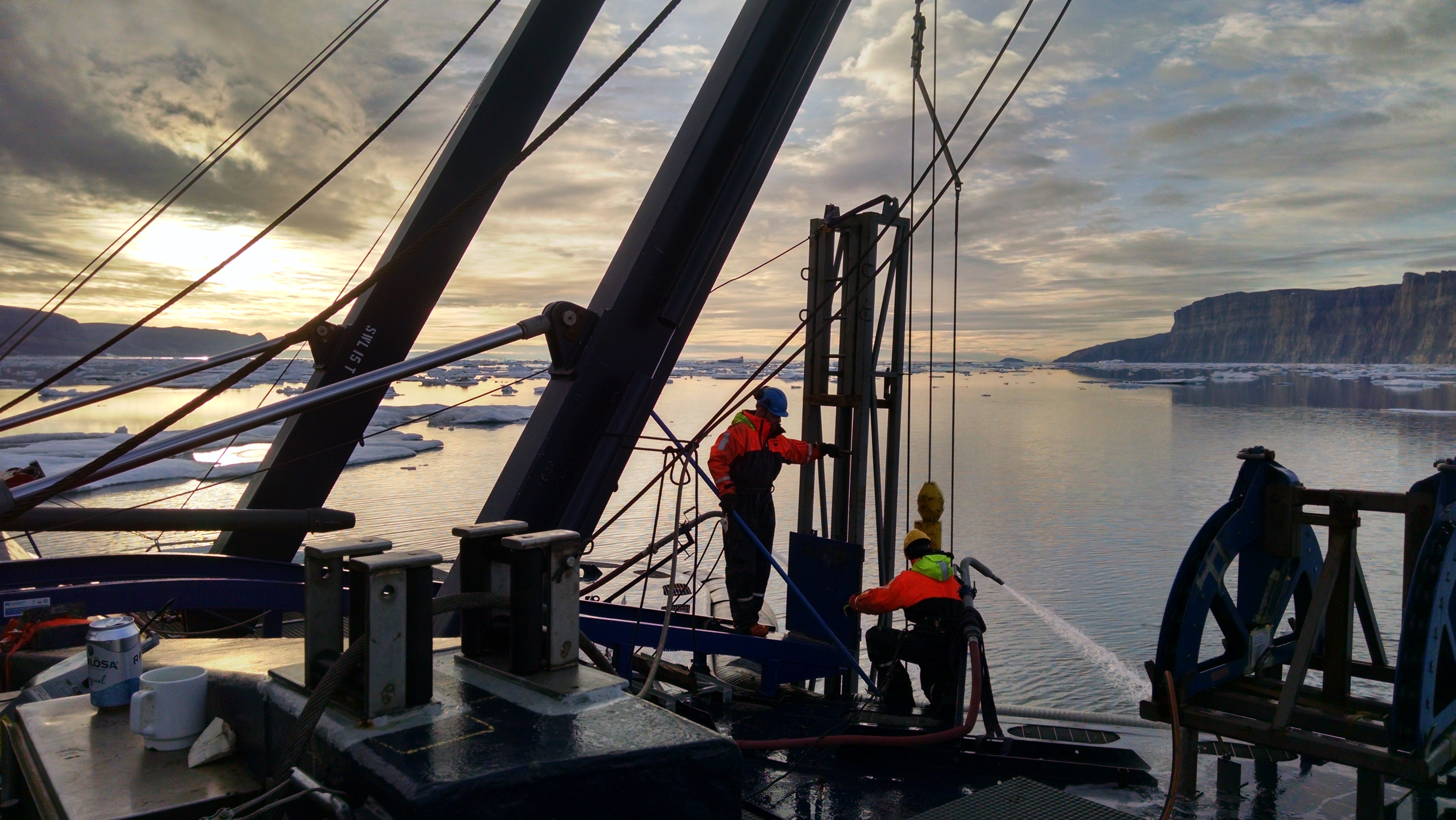
To learn more about one of our recent interdisciplinary expeditions to learn about Greenland’s glacial history, check out this short documentary.
For more information, call 845-758-6822, or e-mail [email protected].
Time: 12:00 pm EST/GMT-5
Location: Brody Lab - Hegeman 107
 Save this Event: