Skip to main content.
Bard Conservatory
  • Menu sub-menuMenu
      Programs
    • Undergraduate Double Degree
    • Graduate Vocal Arts
    • Graduate Conducting
    • Graduate Instrumental Arts
    • Collaborative Piano Fellowship
    • Advanced Performance Studies
    • MA in Chinese Music and Culture
    • US-China Music Institute
    • Preparatory Division
      About
    • Our Story
    • Facilities
    • Staff
    • Faculty
    • Contact Us
      News + Events
    • Newsroom
    • Events
    • 20th Anniversary
    • Archive
    • Information For:
    • Admitted Undergraduate Students
    • Admitted Graduate Students
  • Bard Conservatory Logo
  • Apply
  • Inquire
  • Events
  • Support
  • Search
Graduate Conducting Program
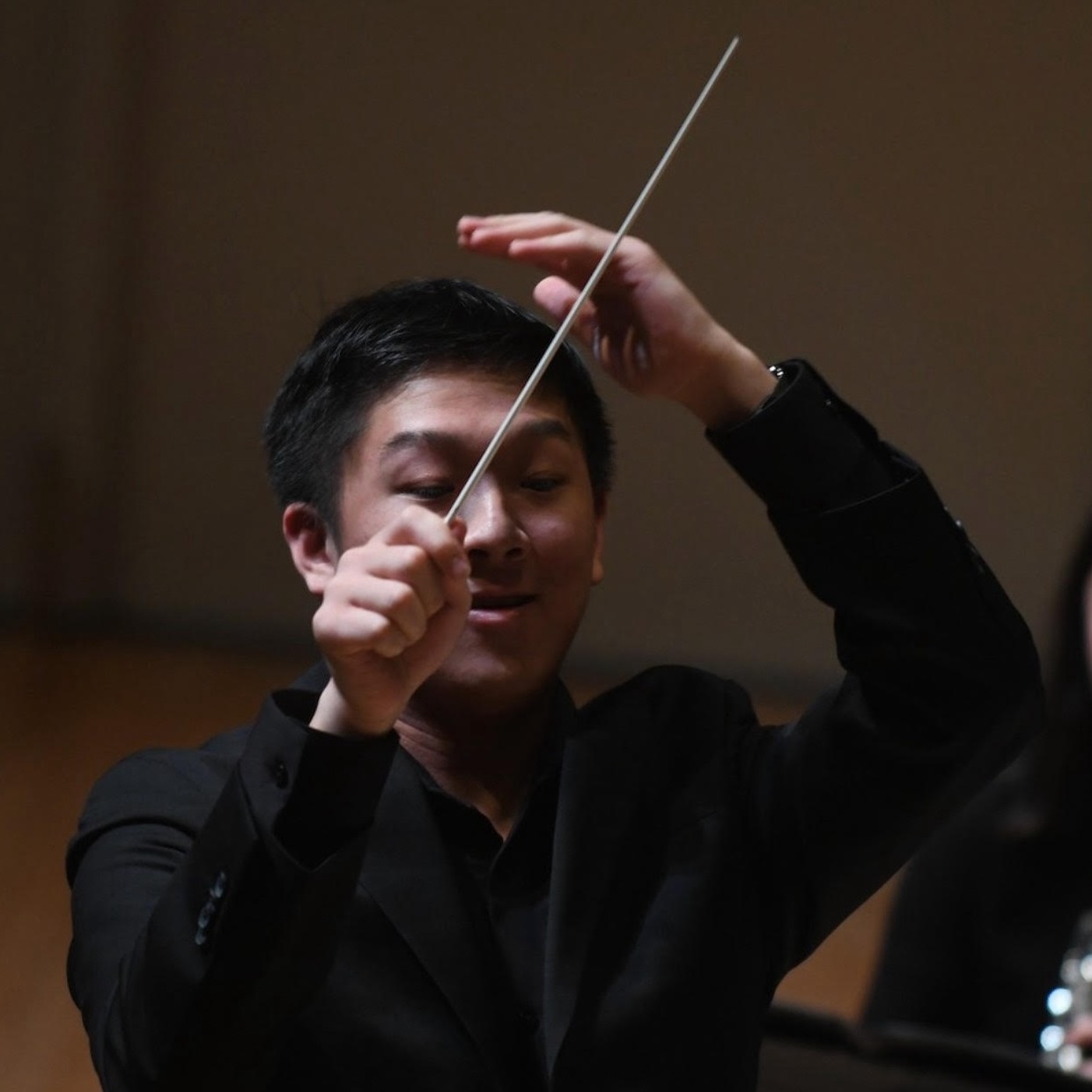
A conductor and student laughing.
Photo by Aya Rebai ’24

Student Life

GCP Menu
  • About sub-menuAbout
    • Core Curriculum
    • Performing
  • Apply sub-menuApplying
    • Audition Requirements
  • Financial Aid
  • Student Life
  • Faculty
  • FAQs
The Graduate Conducting Program is a unique, blended curriculum of orchestral and choral conducting. Students declare a concentration in choral or orchestral conducting during the admissions process but have opportunities to work with both types of ensembles during their studies at Bard. We believe these kinds of broad-based skills are necessary for a life in music in the 21st century. 
A conductor smiles as she leads a piece in a dark room.
Photo by Chris Kayden

Program Opportunities

All conducting students work regularly with three types of ensembles: community, collegiate, and professional. They work with the Bard Symphonic Chorus and the Bard Chamber Singers on Bard’s campus and they travel to New York City to work with the professional Bard Conductors Chorale. Students also have opportunities to conduct on chorus concerts and assist with the Graduate Vocal Arts program mainstage opera. Additionally, all conducting students have biweekly sessions with the Orchestral Conductors Ensemble, a small ensemble of members of The Orchestra Now and the Bard Conservatory Orchestra. Students also work once each semester with full orchestra in special reading sessions with the Bard Conservatory Orchestra.

Student Stories

  • Nicolás Gómez Amín ’25
    Nicolás Gómez Amín ’25

    Nicolás Gómez Amín ’25

    Nicolás Gómez Amín ’25


    What is your current year of study?
    Second year

    What is your focus of study?
    Orchestral Conducting

    Where is your hometown?
    Santiago, Chile

    Where did you study before Bard College?
    Kutztown University of Pennsylvania.

    What did you do this past summer?
    I guest conducted the Orquesta de Cámara del Teatro Municipal de Santiago in Chile and went on a tour with them. I also spent some time with friends and family, and I prepared and ran supertitles for the Bard Music Festival.

    What were your main reasons for choosing to attend the Graduate Conducting Program at Bard?
    I love the amount of podium time we get, and the opportunity to work with talented musicians, ensembles, and faculty. And most importantly, because of our wonderful teacher, James Bagwell.

    What were the last three things you listened to?
    -Brahms' Symphony No. 2 (Otto Klemperer with the Philharmonia Orchestra)
    -Mozart's Don Giovanni (Riccardo Muti with the Vienna Philharmonic)
    -Verdi's Falstaff (Claudio Abbado with the Berlin Philharmonic)
  • Lauren Flaten ’26
    Lauren Flaten ’26

    Lauren Flaten ’26

    Lauren Flaten ’26


    What is your current year of study?
    1st year 

    What is your focus of study?
    Orchestral Conducting

    Where is your hometown?
    Roseville, Minnesota

    Where did you study before Bard College?
    I received bachelor's and master's degrees in flute performance at St. Olaf College and the University of Colorado Boulder respectively.

    What did you do this past summer?
    This summer I worked for the Cultural Caravan, an arts nonprofit in Boulder County, Colorado, where I helped present 17 concerts across 5 cities.

    What were your main reasons for choosing to attend the Graduate Conducting Program at Bard?
    I chose the Graduate Conducting Program at Bard to work with world-class faculty and to "learn by doing" through ample podium time. 

    What were the last three things you listened to?
    I last listened to Vaughan Williams' Fantasia on a Theme by Thomas Tallis (Peter Oundjian with the Toronto Symphony Orchestra), Familiarity by the Punch Brothers, and Brahms Symphony No. 2 (Herbert von Karajan with the Berlin Philharmonic). 
  • Kielor Tung '27
    Kielor Tung '27

    Kielor Tung '27

    Kielor Tung '27


    1. What is your current year of study?
    a. 1st Year
    2. What is your focus of study?
    a. Orchestral Conducting
    3. What is your primary instrument?
    a. Violin
    4. Where is your hometown?
    a. Santa Monica, California
    5. Where did you study before Bard College?
    a. I received both a BA in Music and a BS in Engineering from Swarthmore College
    in Pennsylvania

    6. What did you do this past summer?
    a. I worked with a youth orchestra to put on two concerts at Walt Disney Hall in Los
    Angeles, California, in addition to teaching music to students K-12.

    7. What were your main reasons for choosing to attend the Graduate Conducting Program
    at Bard?
    a. I chose the Graduate Conducting Program at Bard to not only study such
    a vast amount of repertoire, but to be able to conduct it all too.

    8. What were the last three things you listened to?
    a. Bach’s Concerto for Oboe and Violin
    b. Beethoven’s “Eroica” Symphony
    c. Ariana Grande’s “One Last Time”

Life After Bard

The unique and hands-on opportunities available to the Bard Conservatory Graduate Conducting Program have lead our students to exciting and varied careers. These are just some of the distinctions of our graduates.

Ensembles and Institutions: BBC Symphony; Brooks School, director of choral and classical music; Cincinnati College Conservatory of Music Orchestra, assistant conductor; Collegiate Chorale, assistant conductor; Hilliard Ensemble; Luzerne Music Center; New York Youth Symphony; Opera Philadelphia; Tulsa Oratorio Chorus, assistant artistic director

Festivals: Bang on a Can Marathon; Night at Proms; Opera Company of the Highlands

Venues: Carnegie Hall; Le Poisson Rouge; Lincoln Center; Merkin Concert Hall
David Bloom, an alumnus, speaking with his hands to a group.

Alumni/ae Spotlight

David Bloom ’14
Orchestral Conducting
“I had an amazing time studying with the faculty at Bard and am so grateful to have made great friends who happen to be stellar musicians. I had way more enthusiasm than skills on my first day at Bard. My teachers and colleagues together really challenged me to improve my musicianship without ever defeating my passion.”

Alumni/ae Spotlight

You're such an advocate and pioneer for new works and living composers, having conducted over 200 world premieres--has new music always been a passion of yours? If not, when did you discover your passion for it?
New music has been a passion for me from the instant that I discovered it, but it was not until a year or so before I started at Bard that I learned that composers were alive and well and creating incredible work. In fact, one of the things that I enjoy the most about working in new music is that I am in a constant state of discovery--I get to discover new music everyday! My most important goal is to help as many people as I can to enjoy that same thrill of discovery that I've made into my life.  

How has Contemporaneous developed as a group, since its inception at Bard in 2010? It is thriving in New York and throughout the country, and it seems like it will only keep growing! What has it been like to go on that journey with the group?
The early years of Contemporaneous could truly only have happened at Bard, and I'm sure many alumni reading this newsletter know this story quite well--even from an insider perspective! The currency of Contemporaneous is, and always has been, imagination, which Bard students have in spades, so it should be no surprise that so many amazing musicians and composers came together to play and create the music we all wanted to hear. Yet, I still wonder at the immense amount of work that Bard musicians put into Contemporaneous as long as eight years ago, as well as the outpouring of support for the ensemble from faculty, staff, the student body, and the broader community. I am exceedingly grateful to every single person who made music with us or came out to hear us at Bard am so glad to be working with and playing for so many of them still today. This is a thrilling and meaningful journey that would never have even begun without the people of such a special place.

Contemporaneous has a largely educational component to it, and you are also on the faculty of the Special Music High School in the city, as well as a conductor for Face the Music (the nation's only youth music program dedicated to the works of living composers). What is your favorite part of working with young musicians? Has working with them influenced your own work in any way?
The most important thing that I think making music can offer young people, whether nor not they are conservatory-bound, is a practice of empathy. I strive to lead rehearsals, classes, and workshops in a way that emphasizes creativity, listening, collaboration, and ownership among students. Because music requires both a strong sense of individuality and a sublimation of the ego, it is particularly good means of creating an empathic experience in a room. i think the world would be a better place if all young people had that experience on a regular basis. Far from teaching it, I would say that I learn empathy from the experience of teaching, and when that sense is really palpable in a classroom, it's incredibly rewarding.

What are you most excited about in your upcoming season?
It's impossible to choose for me, but I'm always the most excited about the project that I'm working on at any given moment. Right now, I'm in Bethesda, Maryland, where I am working on Iron & Coal , a Beth Morrison Projects show set to premiere May 3 and 4 at the Strathmore Music Center. It's an evening-length multimedia production with music by Jeremy Schonfeld, a singer/songwriter with an amazing voice and a really keen dramatic sense, who wrote this song cycle about his relationship with his father, a Holocaust survivor. I have arranged the songs for a cast of singers, Contemporaneous, several DC-area choirs, and the Maryland Classic Youth Orchestra--a total of about 250 performers! This is such beautiful and moving material that I have been immersed in for the past two years, and I cannot wait to share it with a metropolitan area particularly in need of true stories that affirm life and love.

How has your education from Bard shaped you as an artist?
I had an amazing time studying with the faculty at Bard and am so grateful to have made great friends who happen to be stellar musicians. I had way more enthusiasm than skills on my first day at Bard. Throughout my six years at Bard, my teachers and colleagues together really challenged me to improve my musicianship without ever defeating my passion. The broad liberal arts education I had at Bard is also very formative to who I am as an artist. So much of my work today is about giving context to the music that I perform, both instrumental and operatic--I find myself drawing on the courses I took outside of the Conservatory frequently.

What is your favorite memory from your time at Bard?
I'm struggling to isolate a single moment from my time at Bard that stands out as my favorite--there are so many great times! A random memory that I love, though: does anybody remember when somebody kept pulling the fire alarm in Robbins and nobody fessed up? This must have been 2012. All the residents of the biggest dorm on campus had to work several hours in lieu of compensating the Tivoli volunteer fire department for their troubles. Jimmy Haber (UG '14) had the idea to get together all the musicians in the dorm and form the Robbins Philharmonic, and we ended up doing a few concerts on and off campus. I can't help smiling at that memory--talk about turning lemons into lemonade!

What do you like to do in your down time from conducting and teaching? 
Luckily, my work is also my favorite pastime, so I love to spend time studying scores, making production plans, and listening to music I've never heard before. At Bard, I got into the habit of attending multiple shows per week, and I still do so. One fun side project I'm working on is a podcast that Contemporaneous is currently producing. We'll be releasing a six-episode season later this year--please stay tuned! Hiking and backpacking are longtime passions that I'm only able to indulge occasionally these days, but I always leap at the opportunity. Lately, I've also been reading a lot of Virginia Woolf, James Baldwin, and Yuval Noah Harari.

What is the most important piece of advice that you would give to current students and recent alumni? 
The community at Bard is particularly encouraging to students who have creative ambitions, so I hope that current students will make as much of that asset as they can. The connections with students and faculty that they work with will be lasting and meaningful personal and professional connections. I can't say that I'm in any kind of position to give advice to recent alumni, but I will say that I recently went back to campus to see the opera triple bill and was blown away. I hope you'll all go back and see a show at Bard sometime!
Bard College
Bard College
Conservatory of Music
30 Campus Road
Annandale-on-Hudson
New York 12504-5000
845-758-7196
[email protected]
More Music at Bard: 
Bard Music Program
The Orchestra Now
Musical Mentorship Initiative
Contact Us
Visit the Conservatory
Join our Mailing List
Support Us
Accreditation 
Undergraduate Inquiry Form
Graduate Inquiry Form
Virtual Viewbook
Join the Conversation
Facebook
Twitter
Instagram
YouTube

All photos by Karl Rabe unless stated otherwise.