Building on a 165-year history as a competitive and innovative undergraduate institution, Bard College's mission has expanded across the country, around the world, and to meet broader student needs.
Undergraduates at the Annandale campus come from all regions of the country. Over 18 percent of the student body is international, representing more than 40 countries. Undergraduates share the campus with the students and faculty of a conservatory of music and several graduate programs, which present lectures, concerts, and exhibitions that are open to the entire College community. Affiliated programs and research centers, such as the Fisher Center for Performing Arts, Levy Economics Institute, Hessel Museum of Art, Bard Field Station, and Hannah Arendt Center for Politics and Humanities, also enrich student life.
Undergraduates at the Annandale campus come from all regions of the country. Over 18 percent of the student body is international, representing more than 40 countries. Undergraduates share the campus with the students and faculty of a conservatory of music and several graduate programs, which present lectures, concerts, and exhibitions that are open to the entire College community. Affiliated programs and research centers, such as the Fisher Center for Performing Arts, Levy Economics Institute, Hessel Museum of Art, Bard Field Station, and Hannah Arendt Center for Politics and Humanities, also enrich student life.
Bard by the Numbers
Undergraduate Programs
From human rights to physics and studio arts to experimental humanities, Bard students construct individualized educational programs with faculty who are at the top of their fields.
-
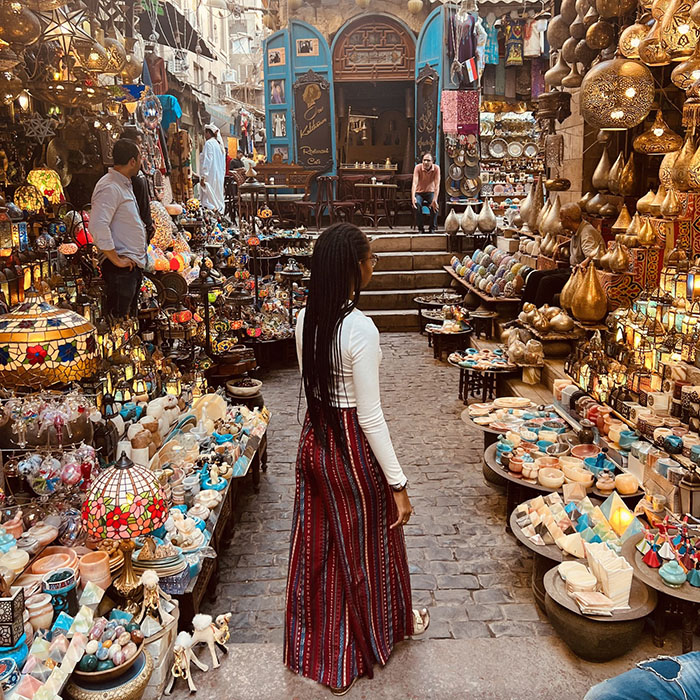 Take advantage of study abroad and international engagement through Bard's global network of programs and partnerships.
-
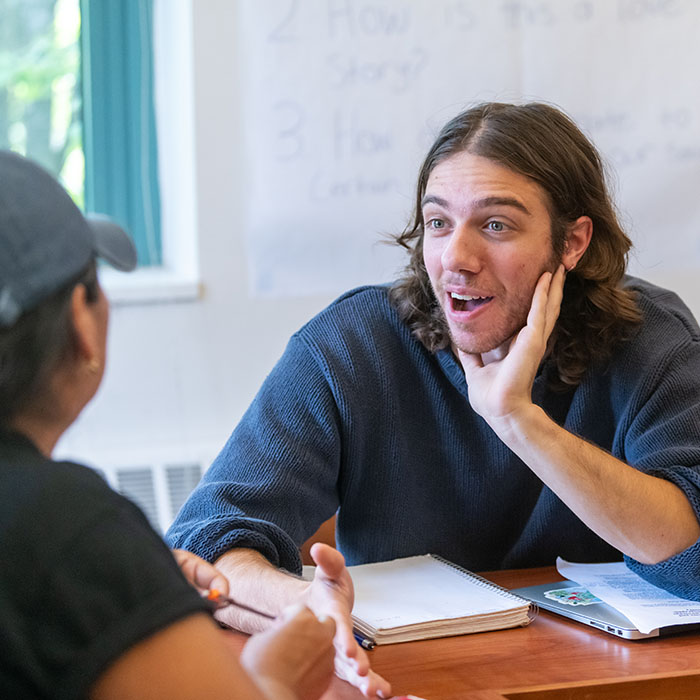 Earn a degree in the following academic divisions: The Arts; Languages and Literature; Science, Mathematics, and Computing; Social Studies; and Interdivisional Programs and Concentrations.
-
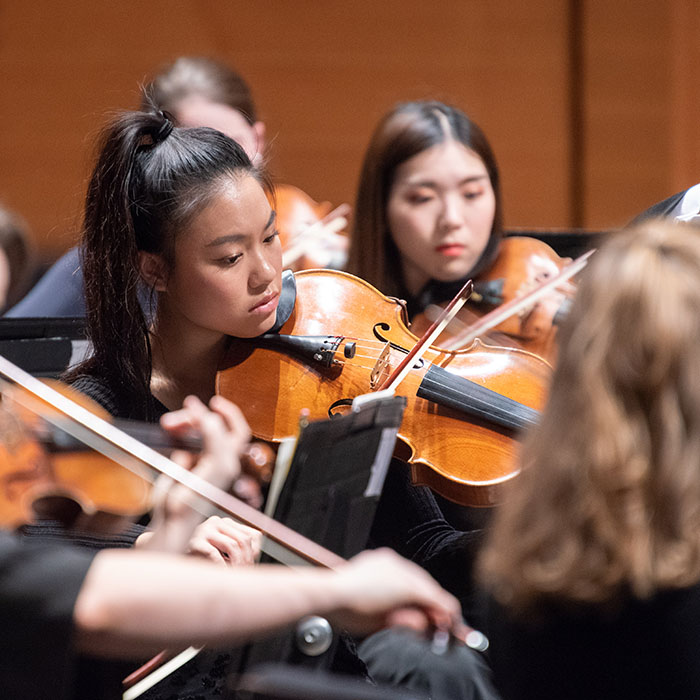 Undertake a five-year, dual-degree undergraduate program, through the Bard College Conservatory of Music or the Program in Economics and Finance. Explore additional dual-degree options including 3+2 and 4+1 BA/MS or BA/MAT programs.
Ephraim Asili MFA ’11 teaching Introduction to 16mm Film. Photo by Chris Kayden
Outstanding Faculty
At Bard all courses are taught by full faculty members. Among Bard’s many distinguished faculty are MacArthur Fellows: poet Ann Lauterbach; artists Jeffrey Gibson, An-My Lê, and Judy Pfaff; journalists Mark Danner and Alma Guillermoprieto; and novelists Valeria Luiselli, Norman Manea (emeritus), and Dinaw Mengestu. Other notable faculty members include journalist Ian Buruma, composers Joan Tower and George Tsontakis, mezzo-soprano Stephanie Blythe, poet Robert Kelly (emeritus), and writers Joseph O'Neill and Francine Prose. In recent years, Nobel laureates Orhan Pamuk, José Saramago, and Mario Vargas Llosa have all taught at Bard.
Photo by Stockton Photo
Campus Life
Campus life in Annandale is vibrant, with world-class performing arts venues; continuous and varied student activities; and numerous cultural and recreational opportunities in the surrounding historic Hudson River Valley and in New York City. Students choose from more than 150 active clubs on campus, and new clubs begin every semester. The Bard College athletic teams are the Raptors. The College’s colors are red and white. The critically acclaimed Bard Music Festival is presented on campus each summer, exploring the life and work of a single composer.
Our Campuses
Bard’s historic main campus is located along the Hudson River in Annandale-on-Hudson, New York. This rural setting is home to Bard’s undergraduate program and many Bard institutes. But the College’s initiatives reach far beyond Annandale. Campuses in New York City, Boston, and Berlin bring Bard’s mission to the world. From urban settings to rural, from programs at small institutes to large universities, Bard is a global institution for the 21st century.
Massena mansion. Photo by Rachel L. Crittenden
Massena Campus
In 2023, Bard acquired 260 acres in Barrytown, adjacent to the Montgomery Place Campus. The Massena Campus now houses the residential Simon’s Rock at Bard College, an early college pioneer, after its nearly six decades in Great Barrington, Massachusetts. Bard Academy students, 9th and 10th graders, will live in the Massena mansion and have all or nearly all courses in the monastery. Early College students will be housed in the dormitory wing of the monastery and take classes on both Main Campus and Massena Campus.
Massena will also house facilities for a number of Bard programs including the Studio Arts Program (print, ceramic, wood, and metal shops), Bard Early College, CHRA, a satellite Dean of Students Affairs Office, and Stevenson Library archives. In addition, there will be classrooms, offices, and exhibition space, and art studios. The Wihanble S’a Center for Indigenous AI, exploring the many implications of artificial intelligence from Indigenous perspectives, is also located at Massena.
Massena will also house facilities for a number of Bard programs including the Studio Arts Program (print, ceramic, wood, and metal shops), Bard Early College, CHRA, a satellite Dean of Students Affairs Office, and Stevenson Library archives. In addition, there will be classrooms, offices, and exhibition space, and art studios. The Wihanble S’a Center for Indigenous AI, exploring the many implications of artificial intelligence from Indigenous perspectives, is also located at Massena.
The Bard Network
Approximately 1,900 undergraduates study in Annandale and more than 600 graduate students study in Bard programs, plus nearly 1,200 students in our early colleges and 2,500 at Bard’s global affiliates. Total enrollment for the Bard Network is now close to 6,500 students.
Photo by Karl Rabe