Skip to main content.
Bard
  • Bard College Logo
  • Academics sub-menuAcademics
    • Programs and Divisions
    • Structure of the Curriculum
    • Courses
    • Requirements
    • Academic Calendar
    • College Catalogue
    • Faculty
    • Bard Abroad
    • Libraries
    • Dual-Degree Programs
    • Bard Conservatory of Music
    • Other Study Opportunities
    • Graduate Programs
    • Early Colleges
  • Admission sub-menuAdmission
    • Applying
    • Financial Aid
    • Tuition + Payment
    • Campus Tours
    • Meet Our Students + Alumni/ae
    • For Families / Familias
    • Join Our Mailing List
    • Contact Us
  • Campus Life sub-menuCampus Life
    Living on Campus:
    • Housing + Dining
    • Campus Services + Resources
    • Campus Activities
    • New Students
    • Visiting + Transportation
    • Athletics + Recreation
    • Montgomery Place Campus
  • Civic Engagement sub-menuCivic Engagement
    Bard CCE
    • Engaged Learning
    • Student Leadership
    • Grow Your Network
    • About CCE
    • Our Partners
    • Get Involved
  • Newsroom sub-menuNews + Events
    • Newsroom
    • Events Calendar
    • Press Releases
    • Office of Communications
    • Commencement Weekend
    • Alumni/ae Reunion
    • Family and Alumni/ae Weekend
    • Fisher Center + SummerScape
    • Athletic Events
  • About Bard sub-menuAbout
      About Bard:
    • Administration
    • Bard History
    • Campus Tours
    • Mission Statement
    • Love of Learning
    • Visiting Bard
    • Employment
    • Support Bard
    • Global Higher Education Alliance
      for the 21st Century
    • Bard Abroad
    • The Bard Network
    • Inclusive Excellence
    • Sustainability
    • Title IX and Nondiscrimination
    • Inside Bard
    • Dean of the College
  • Giving
  • Search
Bard Conservatory Orchestra with Violinist Gil Shaham, Conducted by Leon Botstein, December 13 at 7:00 pm. All proceeds will directly support Bard Conservatory students.
Information For:
  • Faculty + Staff
  • Alumni/ae
  • Families
  • Students
Giving to Bard
Quick Links
  • Apply to Bard
  • Employment
  • Travel to Bard
  • Bard Campus Map

Join the Conversation
Like us on Facebook
Follow us on Instagram
Read about us on Threads
Watch us on You Tube

Bard College Events

Back to all Bard Events

News Menu
  • Newsroom
  • Events Calendar
  • News Archive
  • Press Releases
  • special sub-menuSpecial Events
    • Commencement + Reunion
    • Family + Alumni/ae Weekend
    • Fisher Center
    • Bard Summerscape
    • Bard Athletics
  • Home
Climate and Periodization:Sir Orfeo in the Wolf Solar Minimum

Medieval Studies Program, Literature Program, Experimental Humanities Program, and Environmental and Urban Studies Program Present

Climate and Periodization:
Sir Orfeo in the Wolf Solar Minimum

Tuesday, March 10, 2020
Olin Humanities, Room 205
6:00 pm – 7:00 pm EDT/GMT-4
Alexis Becker, Assistant Professor of English, Ithaca College
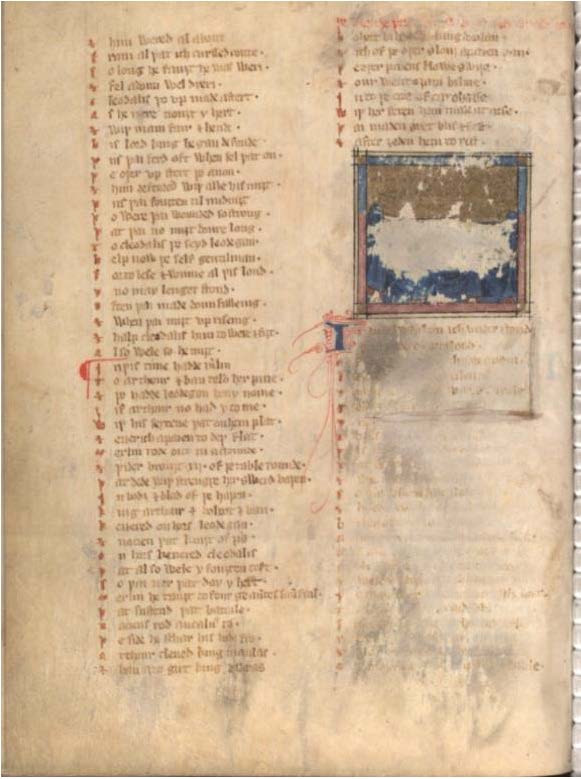
Bruce M.S. Campbell has recently suggested that climate history think of the period between the 1260s and 1470s as a distinct transitional period between the Medieval Climate Anomaly (or Medieval Warm Period) and the Little Ice Age. Alongside this re-periodization, I want to think about how climate can help literary scholars think about, and experiment with, our own often fraught periodizations. Near the beginning of what Campbell calls the Great Transition (a period that brought with it, in England, famine, plague, and a newly energized vernacular literature), was the Wolf Solar Minimum, an approximately seventy-year period of decreased solar activity. The Wolf Minimum period saw an uptick in certain kinds of literary productions in England, particularly Middle English versions and translations of romance. While the environment and textual production are intricately intertwined, I am not claiming that climate has a direct or immediately calculable effect on literature, literary production, or reading habits. But what happens when we use climatic periods, in addition to the other ideologically invested forms of chronological partitioning we currently use, to think with? What happens when we think about, for example, this period of decreased solar activity as a discrete period of literary production? Can it help us make sense of our own period of climate crises and cultural productions? As material for this experiment, I will be looking at a Wolf Solar Minimum text, one that was likely written during this period and which survives in a manuscript from this period. Sir Orfeo, a retelling of the Orpheus myth as an otherworld adventure with a happy ending, is in the Auchinleck Manuscript from around 1331. I will be reading this text—and thinking about its manuscript context—with attention to its climatic period.

For more information, call 845-758-7221, or e-mail [email protected].

Time: 6:00 pm – 7:00 pm EDT/GMT-4

Location: Olin Humanities, Room 205

Subscribe: Save this Event: Subscribe / .ics File

Bard College
30 Campus Road, PO Box 5000
Annandale-on-Hudson, New York 12504-5000
Phone: 845-758-6822
Admission Email: [email protected]
Information For
Prospective Students
Current Employees
Alumni/ae 
Families

©2025 Bard College
Quick Links
Employment
Travel to Bard
Search
Support Bard
Bard IT Policies + Security
Bard Privacy Notice
Bard has a long history of creating inclusive environments for all races, creeds, ethnicities, and genders. We will continue to monitor and adhere to all Federal and New York State laws and guidance.
Like us on Facebook
Follow Us on Instagram
Threads
Bluesky
YouTube