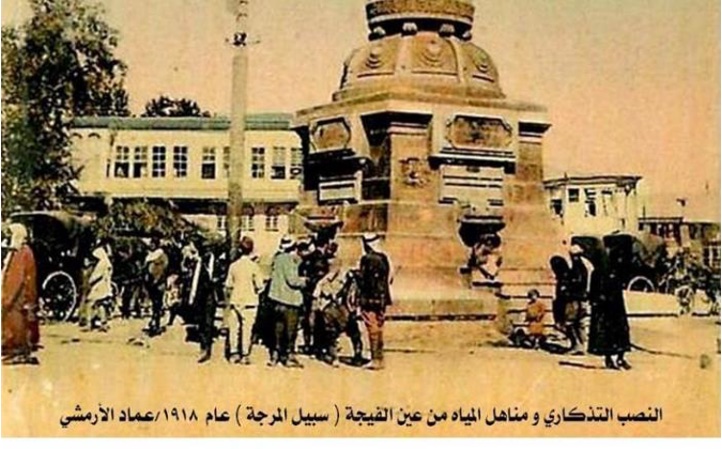
The Telegraph Column and the Marjeh Fijeh Water Tap in Damascus, 1918 (courtesy of Imad al-Armashi)
Dean of the College, Historical Studies Program, and Middle Eastern Studies Program Present
Damascus Fijeh Water Supply and Hygienic Modernity Imperialism
Benan Grams, PhD, Assistant Professor, Department of History, Loyola University, New Orleans
Thursday, December 7, 2023
Hegeman 204A
5:30 pm EST/GMT-5
Since the second half of the 19th century, there has been a global recognition of the crucial role of hygiene and clean water in combating diseases that historically plagued humanity. Sanitary water systems became integral to a worldwide movement aimed at enhancing public health and minimizing waterborne illnesses. The 1903 Fijeh Water Project in Damascus was an Ottoman measure initiated to elevate hygienic standards and improve public health within the Syrian province, particularly amidst recurrent cholera outbreaks. It constituted part of the Ottoman Empire's efforts to develop its public health sector. However, the funding challenges the project encountered and the diplomatic tensions it sparked underscore the political nature of public health. The case demonstrates how the Ottoman public health sector was subject to influences from hygienic modernity imperialism, intricately linked to global imperialist and capitalist endeavors of major powers. The Ottoman government's ability to sustain hygiene services in certain communities was contingent upon not conflicting with the capitalist interests of influential entities. The narrative of the Damascus Fijeh water project elucidates how the Ottomans' endeavors to modernize public health were undermined by the same powers that criticized their inadequate public health measures.5:30 pm EST/GMT-5
For more information, call 845-758-7667, or e-mail [email protected].
Time: 5:30 pm EST/GMT-5
Location: Hegeman 204A
 Save this Event: